
Welcome to the Intersection of People, Technology, and Business
Human-centered technology & organizational development specialist helping teams adopt AI, improve ways of working, and turn responsibility into everyday practice.
About me

Hi, I’m Katariina.
I’m interested in the space where people, strategy, and technology meet. That space is often messy, but it is also where some of the most meaningful organizational work happens.
My background has taken me from HR and recruitment to a tech startup, IT consulting, organizational development, and now doctoral research in software engineering. Along the way, I’ve learned that real change rarely happens through big statements alone. It happens through everyday structures, tools, conversations, decisions, and ways of working.
I’m especially curious about how organizations grow during the age of AI without losing the human side of work. How do we build clarity without becoming rigid? How do we move fast without burning people out? How do we turn good intentions into practical habits?
My work is about connecting dots, asking useful questions, and helping people make sense of complex systems so they can move forward with more clarity and confidence.
My approach
In my approach, I use “designed defaults” to look at the invisible settings that shape everyday work: meetings, tools, routines, roles, processes, and incentives. These defaults influence what becomes easy, difficult, visible, or ignored in an organization.
“Responsible ways of working” is about the direction and quality of those choices. It asks whether the way work is designed supports good decisions, sustainable performance, learning, wellbeing, accountability, and long-term impact.
Designed Defaults
Designed defaults is a concept I’ve explored especially during my research. It is about the idea that good intentions are not enough. The systems, tools, processes, and everyday choices around us need to be designed so that the better option becomes the easier or more natural one. In my work, I’m interested in how organizations can embed things like sustainability, responsibility, learning, and wellbeing into their normal ways of working, instead of treating them as separate initiatives. It’s about making the desired way of working the default, not an extra effort.
Responsible Ways of Working
Responsible ways of working is a theme I have explored across HR, IT consulting, organizational development, and research. In practice, it has meant looking at how roles, collaboration models, learning structures, governance, and everyday decisions shape the way people work. For me, responsibility is not only about values, but about whether organizations create conditions where people can do good work, make thoughtful decisions, and grow without unnecessary complexity or overload.
Work experience
Master’s Degree in Education, PhD studies in Software Engineering
Covered multiple industries: 5+ years in recruitment & talent, 3+ years in adult education, 4+ years in consulting, 4+ years in ICT industry
Designed target-state ways of working and capability roadmaps for IT organizations
Facilitated role clarity, governance, decision-making, and collaboration workshops
Built learning paths, onboarding, training concepts, and curriculum structures
Conducted interviews, surveys, and research on responsible technology practices
Extensive experience in stakeholder collaboration and management
-
I started my career in recruitment industry. That is when I understood the importance of well-functioning processes and the value that people development can bring to a company. During my career I have interviewed people from interns to senior expert, worked as in-house and external recruiter, and developed recruitment practices. I have experience ranging from micro companies to global giants and I have recruited people successfully to sales, marketing, ICT & software, consulting and finance positions.
-
The philosophy of continuous learning runs in my veins. It has been extremely motivating to work in adult education and teach people who are already in working life. I have conducted several in-house trainings ranging from adopting new tools to psychological safety in addition to training sessions for external audiences.
I have also experience in building online courses, curricula, and training material with different kind of LMS’s.
-
Ever since working in recruitment industry I realized that learning some hands-on software skills would be beneficial. I did a crash course related to cloud basics and secured a consulting position in a DevOps company.
There I quickly realized that rather than building infrastructure to cloud, I wanted to help companies in more cultural topics like ways of working, communication, role clarification, and building future-oriented roadmaps.
This was the position where I understood that bridging human sciences with technology was my sweet spot and my future career.
-
Throughout my career, I have worked closely with leadership teams. In recruitment, HR, and consulting, keeping relevant stakeholders informed and ensuring timely decision-making has been essential.
I started my PhD in 2025 because I wanted to deepen my understanding of how organizations can future-proof themselves and become more responsible and resilient. During my PhD, I have strengthened my skills in qualitative and quantitative research, as well as analytical thinking.
After publishing my first papers, it became clear to me that organizational default behavior is key to transformation.
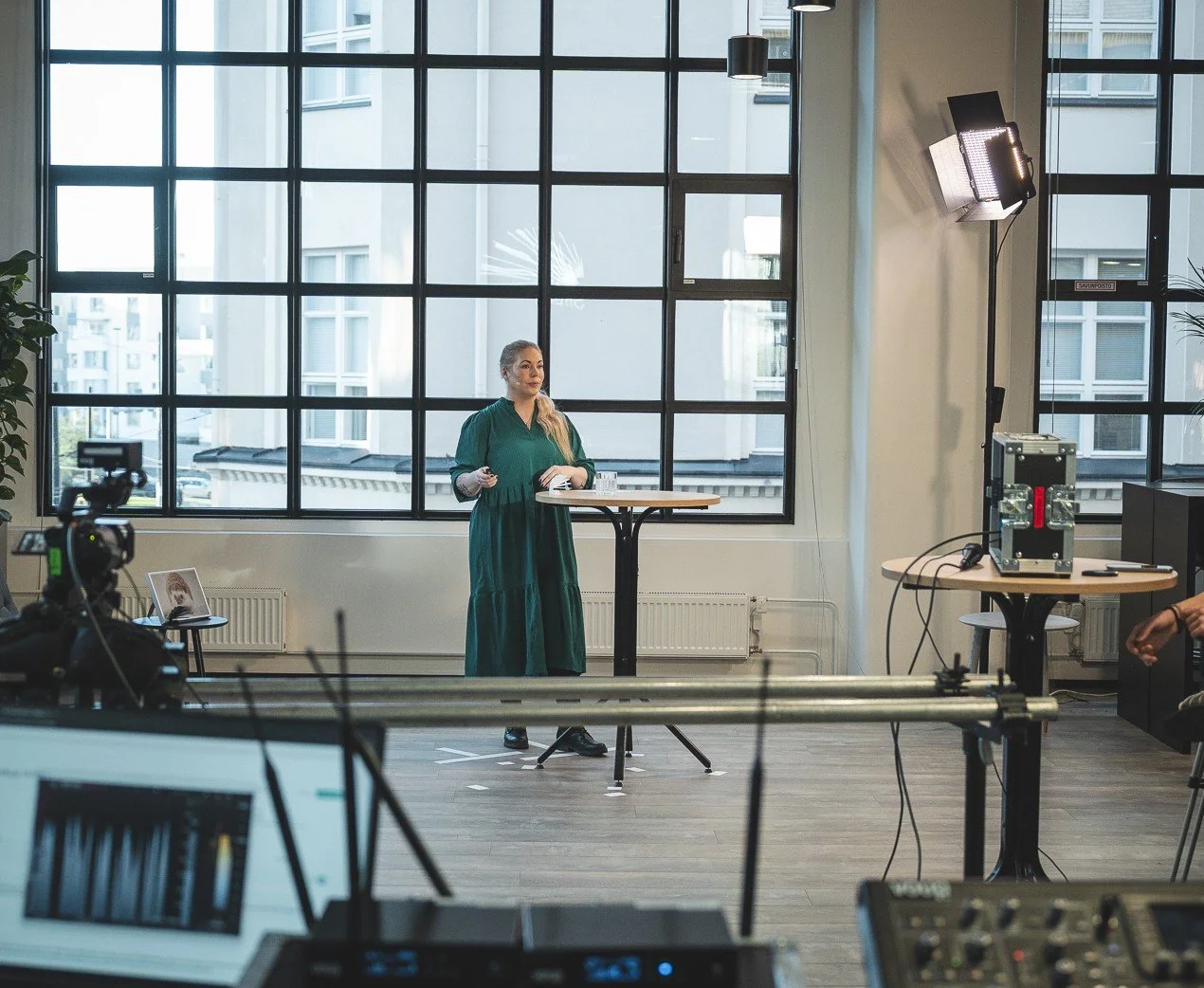
Background image: Mimmit koodaa, @mimmitkoodaa #MimmitKoodaa, Mikke Pöyhönen, @photomikke
How can I help?
Every project, big or small, starts with an initial conversation where we make sure the service fits your needs. No strings attached.
I’m currently employed at LUT University, but I am open for short-term projects alongside my current role.
If the service I provide doesn’t fit your needs, I will be honest about it. This is why we will first get to know each others before we agree about the delivery.
-
Recognizing Organizational Defaults: What Your Ways of Working Are Already Optimizing For
A workshop on identifying the hidden defaults in an organization’s structures, tools, meetings, decision-making, incentives, and everyday habits. The goal is to understand what current ways of working make easy, what they make difficult, and whether they support the outcomes the organization actually wants.
Responsible Ways of Working in Tech Teams
A workshop or training on how roles, collaboration models, governance, learning culture, and prioritization shape whether teams can work sustainably, ethically, and effectively.
Human Skills in the AI Era
A training on why communication, judgment, collaboration, learning, and sense-making become even more important as AI tools become part of everyday knowledge work.
-
Current State Assessment of Ways of Working
A structured assessment of how an organization or team currently works: roles, collaboration models, governance, decision-making, learning culture, communication, and pain points. The outcome can be a clear summary of current strengths, blockers, risks, and practical development recommendations.
Designed Defaults Review
A review of the organization’s existing processes, tools, rituals, and operating habits to identify what they are currently “designed” to encourage. This helps reveal whether the everyday defaults support the desired goals, such as sustainability, responsibility, employee wellbeing, customer focus, or strategic execution.
Responsible Work Practices & Capability Roadmap
A research-informed service that helps organizations define what responsible ways of working mean in their context and translate that into practical actions. The outcome can be a roadmap covering capabilities, structures, learning needs, leadership practices, and measurable next steps.

Get in touch
Send me a message through the form and briefly describe your current need or situation. I’ll get back to you with suggested times for a 45-minute meeting so we can continue the discussion. The meeting comes with no commitment.